5 AI Use Cases You Should Definitely be Trying in Life Science Work
I want to share five things you maybe don't, but probably should, be doing with gen AI at work.
Hey friends,
I recently gave a small presentation to a group of life science consultants about different ways AI can be used at work. Nothing groundbreaking on its own, but I always try to share something short, sweet, and actually useful. Anyone with an internet connection is already drowning in AI news, opinions, and hot takes. The last thing people need is more of that.
After the presentation, a colleague approached me and said she had a bit of a lightbulb moment. She asked if I could hold a separate discussion about what her team specifically could do with generative AI. I didn't know anything about what her team does, and while I usually answer the question "how can I use gen AI?" with another question ("well, what the heck do you normally do all day?"), it got me thinking.
So for this week, I want to share five things you maybe don't, but probably should, be doing with gen AI at work. I don't know which of these will be most useful to you personally, but all five have been useful to me. Take what works.
1. Answering a Questionnaire from a Stack of Documents
If you've ever been handed a questionnaire and a pile of reference documents, you know the drill. Read everything, hunt for answers, cross-reference, repeat. Instead, I give the AI instructions on what I want it to do (answer the questions in this questionnaire as best you can using the reference documents provided), upload or paste the documents, and include the questions. I ask for the output in JSON format so I can import it straight into Excel and review line by line. The AI does the scavenger hunt. I do the quality check.
2. Turning Human-Readable Tables into Computer-Readable Data
Tables in Word docs and PDFs look great to a human reader, but they're a nightmare for analysis. Merged cells, inconsistent headers, and just different formatting documents of the same type. AI can take those tables and restructure them into clean, flat data. Again, I request JSON output because it's easy to read, AI is reliable at writing it, and I can import it into whatever tool I need for the next step. This one sounds simple but it sets up everything downstream.
3. Scraping Unstructured Documents to Build a Dashboard
This is one of my favorites. I had several years' worth of client presentations that contained cost of goods calculation results. As things tend to do over time, the structure and wording of each presentation had shifted. Slide layouts changed. Terminology drifted. But the underlying data was still in there. I was able to have AI find the relevant tables and results across all of those presentations, standardize the outputs, and consolidate everything into a format I could use to build a dashboard. Values over time, across projects, all in one place. Without AI, this would have taken months of manual extraction (or let’s be real, I was never going to do it). With it, it took a few afternoons.
4. Building a Curated News Feed
This is actually how the news section of this newsletter gets made. The key is giving good instructions so that an AI with web browsing capability searches on your behalf and finds articles in whatever niche and flavor you're interested in. Think of it as a super personalized, curated news feed that you design. This is a great one for any professional who wants to stay on top of industry developments, be the first to hear about a new regulatory guidance, or just not miss something important while buried in project work.
5. Learning to Use Your Existing Tools Better
This one might sound boring, but it has saved me an embarrassing number of hours. I like to think I'm above average when it comes to Microsoft Office (Word, Excel, and Project being the main ones). But even for me, I only scratch the surface of what these tools can do. When something seems broken or I can't figure out how to do something, AI makes a surprisingly effective step-by-step instructor. It walks me through features I didn't know existed and solves problems I would have otherwise spent 2 hours Googling. It's a good reminder that AI doesn't always have to replace your tools. Sometimes it just helps you use the ones you already have a whole lot better.
That's the list. None of these require coding skills or special software. The common thread is clear instructions and the right input. If even one of these saves you time this week, I'll consider that a win.
Thanks for reading!
Alexa
News
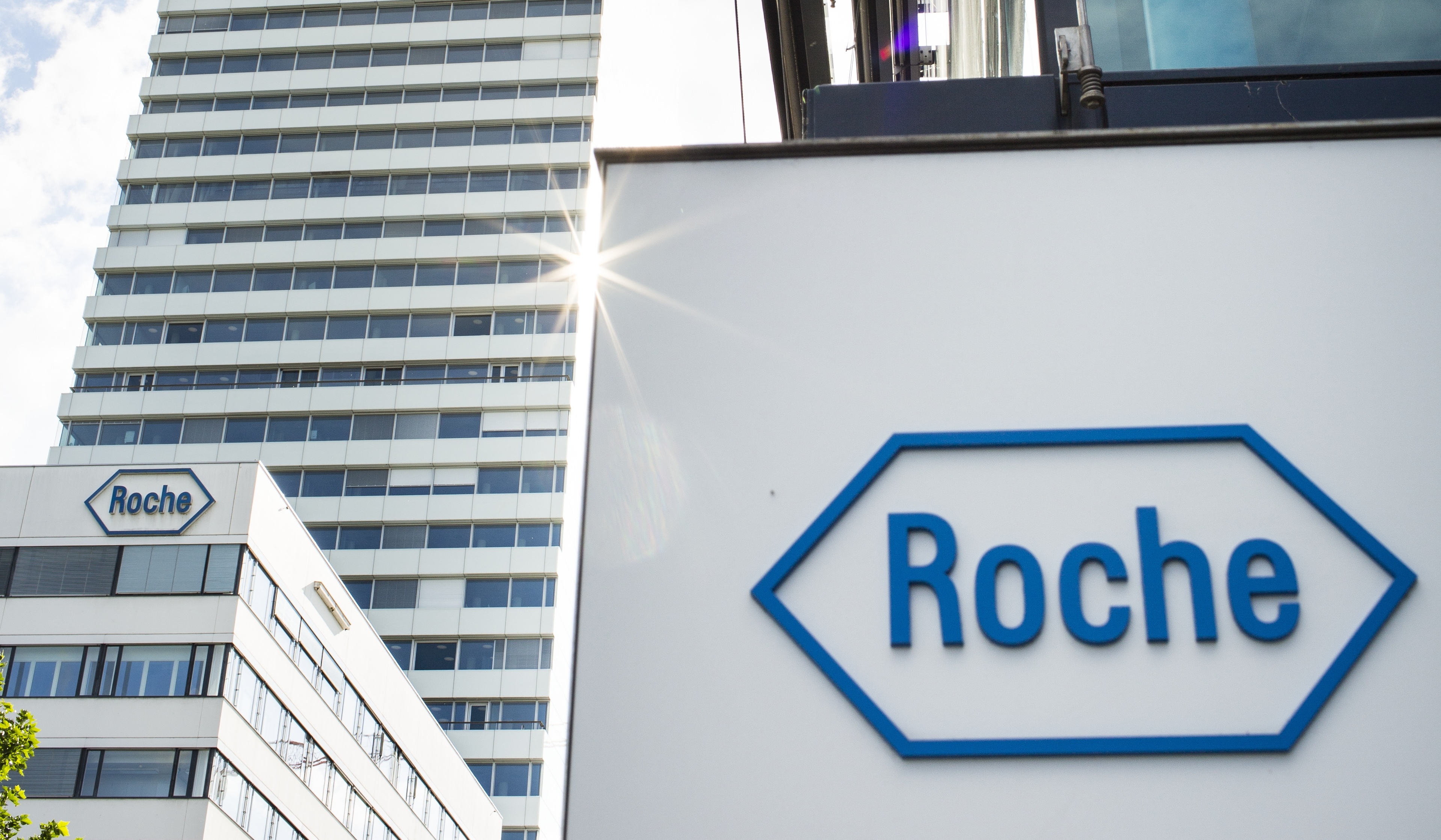
Roche Launches Pharma's Largest AI Factory with NVIDIA
What's New: Roche announced the deployment of 2,176 NVIDIA Blackwell GPUs across facilities in the US and Europe, bringing its total on-premise and cloud GPU infrastructure to over 3,500 GPUs. According to Roche, this is the largest announced GPU footprint available to any pharmaceutical company. The expansion builds on a strategic collaboration with NVIDIA that began in 2023.
How It Works:
In R&D, the infrastructure powers Roche's "Lab-in-the-Loop" approach, connecting biological and chemistry experiments with AI models so scientists can test hypotheses at scale and accelerate discoveries
In manufacturing, NVIDIA Omniverse-powered digital twins create virtual replicas of production lines, allowing engineers to optimize processes and factory designs before making physical changes
In diagnostics, NVIDIA Parabricks software processes large genomic datasets, and digital pathology tools scan high volumes of images to detect disease patterns
Roche is also using NVIDIA NeMo Guardrails to build healthcare-grade conversational AI with built-in safety controls
Why It Matters: This is a strong signal of where the industry is heading. When the world's largest biotech company builds a dedicated supercomputing platform and embeds AI across discovery, manufacturing, and diagnostics simultaneously, it sets the pace for the rest of the sector. For CMC and QA professionals, the digital twin application is especially relevant. The ability to simulate and optimize manufacturing processes virtually before touching a production line has direct implications for process validation, tech transfer, and facility design. It's also worth noting that Roche isn't just using AI in one silo. They're threading it through the entire value chain, which is the model most large pharma companies will eventually follow.
My Take: The scale of this investment tells you everything about where Roche thinks the competitive advantage will come from. The digital twin piece in particular is one to watch for anyone in manufacturing or process development. If your competitors are virtually simulating their production lines and you're still doing it the old-fashioned way, that gap is going to get uncomfortable fast.
Source: Roche Media Release
Earendil Labs Raises $787M for AI-Driven Biologics Design
What's New: Earendil Labs, a Beijing-headquartered biotech, closed a $787 million private placement to scale its AI-driven biologics discovery and development platform. The round was backed by Sanofi, Pfizer's Biotech Development Fund, Dimension Capital, DST Global, and Luminous Ventures. The company's AI engine has already produced more than 40 programs, including an anti-TL1A antibody heading into Phase 2.
How It Works:
Earendil uses machine learning across the full biologics R&D lifecycle, from target identification through candidate optimization
While specific technical details remain under wraps, the platform is generating antibody and bispecific antibody candidates at a pace that has attracted repeat business from Sanofi
Sanofi has already signed two separate licensing deals with Earendil (April 2025 and January 2026), collectively worth up to $4.28 billion in milestones for bispecific antibodies targeting autoimmune and inflammatory bowel diseases
Earendil is planning multiple IND filings in 2026 and 2027
Why It Matters: The size and speed of this financing tells you something about how quickly AI-native biologics companies are gaining credibility. This isn't a seed round on a slide deck. Earendil has real programs, repeat pharma customers, and clinical-stage assets. For anyone in CMC, the downstream implications are significant. If AI-designed biologics start entering the pipeline at this rate, the demand for CMC development, analytical method development, and manufacturing readiness will increase in parallel. The molecules themselves may also present new challenges, as AI-optimized candidates could have novel structural features that don't fit neatly into existing platform processes.
My Take: Two things stand out here. First, Sanofi coming back for a second deal within nine months is the strongest validation signal you can get from a pharma partner. Second, 40+ programs from a single AI platform is a volume of output that traditional discovery teams simply can't match. Whether all 40 are high quality remains to be seen, but the throughput alone is going to change how pharma thinks about pipeline strategy.
Source: BioSpace

Takeda Inks $1.7B AI Discovery Deal with Iambic Therapeutics
What's New: Takeda has entered a multiyear technology and discovery collaboration with Iambic Therapeutics, a clinical-stage AI biotech based in San Diego. The deal gives Takeda access to Iambic's AI-driven drug discovery platform and its NeuralPLexer model, with potential payments to Iambic exceeding $1.7 billion in milestones and royalties. Initial programs will focus on small molecules for oncology, gastrointestinal, and inflammation indications.
How It Works:
Iambic's platform combines generative AI models with automated wet lab capabilities to design and optimize small molecule drug candidates
NeuralPLexer is a generative model that predicts protein-ligand complex structures at the atomic level, essentially showing how a potential drug will physically bind to its target protein in 3D
Takeda will use these tools to advance a set of high-priority small molecule programs, leveraging Iambic's computational predictions alongside its own internal research
Iambic already has partnerships with Revolution Medicines, Jazz Pharmaceuticals, and Lundbeck, and has demonstrated clinical-stage validation of AI-designed candidates
Why It Matters: This deal aligns with Takeda's strategic decision to narrow its focus from ten modalities down to four (small molecules, biologics, ADCs, and cell therapy, though they've since dropped cell therapy). For the broader industry, this is another data point confirming that AI-driven discovery partnerships are shifting from experimental pilots to large-scale, multi-target commitments. For CMC professionals, the acceleration of small molecule discovery means a faster flow of candidates entering development, which translates to increased demand for formulation development, analytical method qualification, and process scale-up. As Takeda's research chief put it, the companies that fully integrate AI into drug development will be the winners over the next five years.
My Take: The $1.7B headline number is eye-catching, but the more interesting signal is that Takeda is using Iambic's wet lab alongside its AI. This isn't just licensing software. It's outsourcing the entire computational-plus-experimental discovery loop. That model, where AI companies own both the algorithm and the bench, is going to be increasingly common. It also raises an interesting question for CROs and CDMOs about where they fit in a world where AI biotechs can do discovery and early development under one roof.
Source: Fierce Biotech
Get the next edition in your inbox
Clear, practical takes on what matters for your CMC, QA, and regulatory work, once a week.
No spam. Unsubscribe anytime.