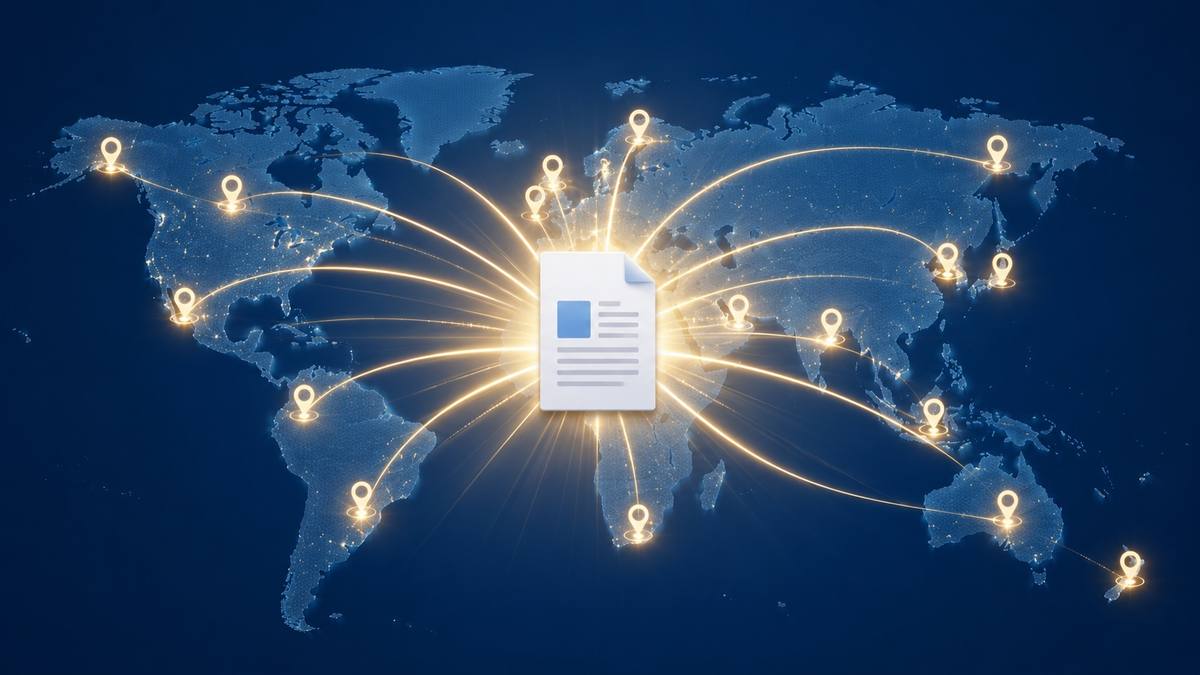
AI wrote the dossier. Regulators approved it.
Amgen filed a manufacturing process update to 27 global regulators at once and 85% approved within 9 months.
Hey friends,
This week I want to spend some time on a real-life use case that's going to interest a whole bunch of you: getting AI to write your dossier. Courtesy of my LabScale AI agent team, a fun paper landed on my desk from Amgen, published back in February in the Journal of Pharmaceutical Sciences. It's a case study of something a lot of us have only daydreamed about, actually pulled off at scale on a real product.
We all have the same fantasy about AI doing our long, man-hour-heavy work for us, but the harder question is how you actually get there. Unfortunately (or fortunately, depending on how you make your living), we're still not at the point where the free trial of ChatGPT spits out full-blown eCTD sections while we sip mocktails on the beach. Though it's a lot closer than you'd think.
So here's what Amgen set out to do. They took Vectibix — panitumumab, a legacy antibody that's been on the market since 2006 and sells in something like 79 countries — and pushed a CMC manufacturing change out to regulators all over the world at the same time, using one digitally authored dossier instead of the usual bespoke filing for each country. The surprising part is how well it worked. 85% of the participating regulators (23 of 27) approved the change within nine months. For a post-approval change like this one, the conventional path usually runs closer to…wait for it… 36 months (that’s THREE freakin’ years!).
So how'd they pull it off? At a high level, three things working together. First, they converted their static templates into structured, machine-readable data, so the numbers sat in discrete fields instead of being buried in prose. Second, generative AI drafted the narrative content that doesn't come from a clean data source: several sections of the filing plus the Module 2.3 Quality Overall Summary, each handled by a custom tool they built in-house. Third, they ran the whole package through a cloud platform (Accumulus Synergy) so every regulator could review the same submission at the same time, with EMA acting as the reference authority. And a human stayed in the loop the whole way through, locking tables and checking every number against its source.
Here's my read on why it actually worked. They made a plan. They thought in systems and data flow before they thought about the AI. Then they rolled up their sleeves and did the tedious, unglamorous work of getting their data into shape so the AI had something clean to work with. The AI is only one piece of the puzzle, and it might even be the easiest piece. All that reusable, structured content is what let them cut country-specific documentation by a potential 75%.
Now, the part that hits closest to home for me… I spend a good chunk of my consulting life down in the weeds of bioprocess COGS, so the numbers that jumped out at me were the money ones: $10 to $100 million in manufacturing capacity that a single major post-approval change can free up, plus the inventory you stop scrapping once the optimized product finally clears. But more importantly, you know what sits on the opposite end of that lag?
Well, when you have to build a separate dossier for every one of 79 countries, someone has to decide which markets go first, and it's almost never the small ones. Patients in those countries get pushed down the priority list, waiting years for a better product, or never seeing the change at all. Filing everywhere at once starts to level that out. How many process improvements never got made in the first place because the regulatory lift just wasn't worth it? How many better, cheaper, more reliable ways to make a drug are sitting in a drawer somewhere because nobody wanted to refile in 79 countries to do it? If that changes, and this paper says it's starting to, it changes for a whole lot of products, and a whole lot of patients.
That shift is exactly why I keep going on and on about agents in CMC. Once AI is carrying things like more of a regulatory load, execution time drops toward zero, and the rest of us have to move our attention to wherever it's needed next: the plan, the data, the verification, and the judgment calls. I'll admit, it's a very weird feeling. You spend a whole career getting fast at a thing, and then one day the thing just stops being the bottleneck.
Thanks for reading!
Alexa
News
Amgen Files the First Digitally Authored CMC Change to Global Regulators, All at Once
What's New: In a February paper in the Journal of Pharmaceutical Sciences, Amgen laid out a pilot in which it used generative AI and a shared cloud platform to submit a single, digitally authored CMC post-approval change to regulators around the world at the same time, instead of building a separate dossier for each country. The product was Vectibix (panitumumab), a legacy antibody sold in roughly 79 countries. 85% of the participating regulators (23 of 27) approved the manufacturing change within nine months, against the ~36 months a comparable change usually takes.
How It Works:
Static templates were converted into structured, machine-readable data, so repeatable content like product name, batch information, and stability data sat in discrete fields instead of being buried in prose.
Structured authoring (via Workiva) auto-populated the tabular, repeatable sections, while custom generative-AI tools drafted the narrative sections and the Module 2.3 Quality Overall Summary (built in-house as GenCTD and GenQOS).
Human authors stayed in the loop the whole way through, locking tables and checking each data point against its source with an auto-generated verification table.
The complete eCTD dossier was shared through the Accumulus Synergy cloud platform so every participating regulator could review the same package simultaneously, with EMA acting as the reference authority.
Filings still ran through conventional national channels in parallel for fees and local requirements.
Why It Matters: The bespoke, country-by-country dossier is one of the biggest hidden taxes in global CMC work, and it pushes smaller markets to the back of the queue when companies triage which filings to do first. Structured data plus reusable content cut country-specific documentation by a potential 75%, and the simultaneous cloud review compressed a roughly three-year process into nine months. Amgen puts the value of a single major post-approval change at $10 to $100 million in freed manufacturing capacity, on top of reduced inventory scrap and faster patient access to an improved product. It's also a real, working example of AI-generated content earning an auditable place in a regulatory submission, rather than being used as an unofficial shortcut.
My Take: I get into this more in the note above, but the short version is that the nine-month headline is real, and the reason it happened is the least glamorous part of the whole story. They structured their data before they ever pointed AI at it. That's the piece any of us can start on without a genAI budget, and it's the part that actually moves the timeline.
Source: Journal of Pharmaceutical Sciences
Weill Cornell's Multi-Agent System Designs Clinical Trials from Real-World Data
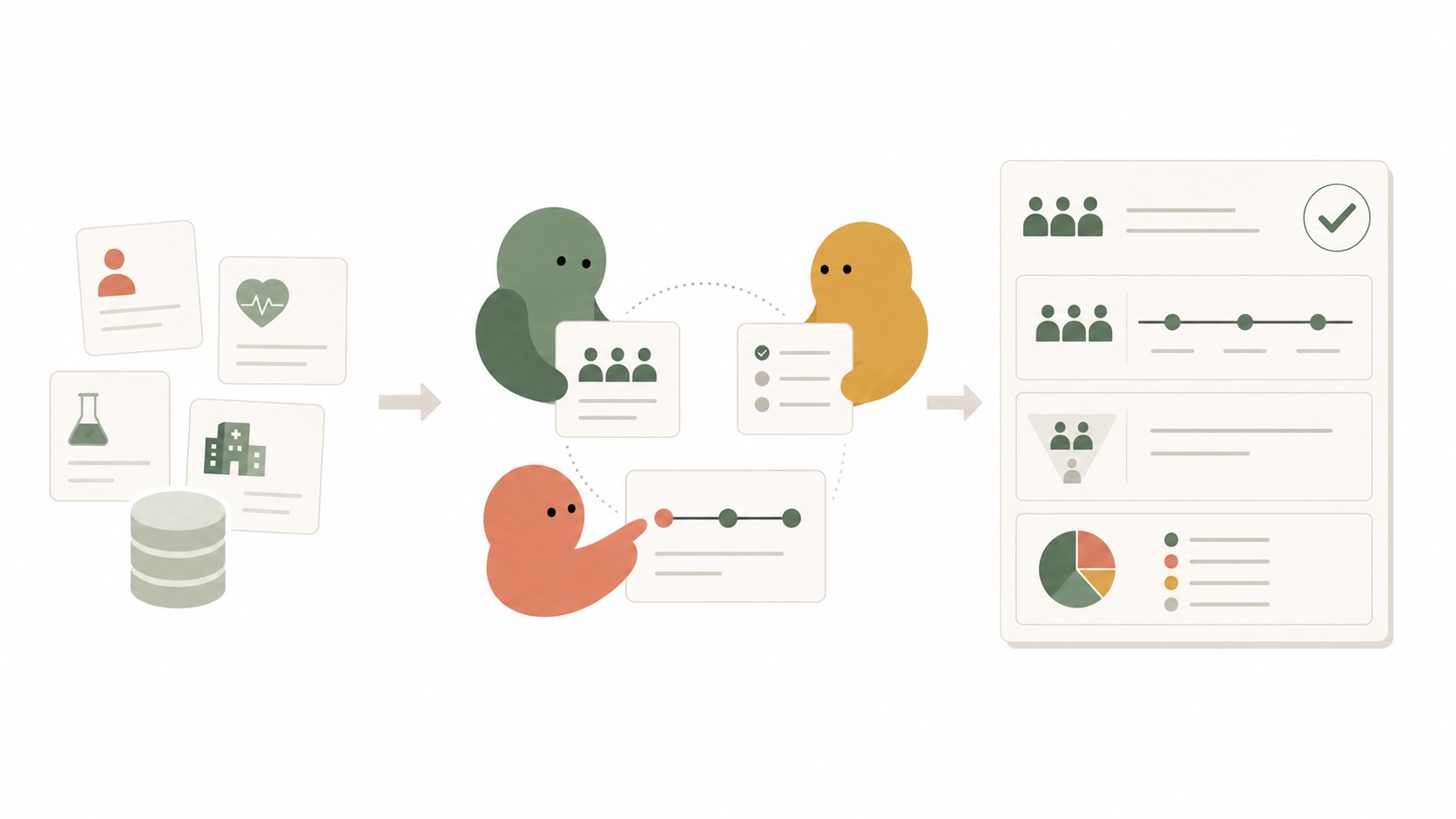
What's New: On July 7, Weill Cornell Medicine investigators published EmulatRx in Nature Communications, a multi-agent LLM framework that supports clinical trial design by extracting and refining real-world evidence from EHR data.
How It Works:
Five specialized agents (Supervisor, Trialist, Informatician, Clinician, and Statistician) collaborate with each other in natural language to draft and iterate trial designs.
The system runs target-trial emulation against real databases, including MIMIC-IV and the INSIGHT network.
The team evaluated it on both acute and chronic conditions and reports that it can flag differential treatment effects across patient subgroups.
Why It Matters: Protocol design and eligibility and outcome choices are high-stakes, human-accountable decisions. An agent "team" that drafts and iterates protocols from real-world data raises the same questions we're already asking about AI-authored manufacturing documents: who reviews, who owns the decision, and what audit trail proves a human didn't just rubber-stamp the output. It takes Quality Unit oversight of AI-assisted work and moves it from hypothetical to concrete.
My Take: Multi-agent trial design is impressive, and it makes QU oversight of AI-assisted protocol work feel a lot less hypothetical than it did even a few months ago. A draft is a perfectly good place for these systems to get to work. "Ready to file," with no human who actually understands the science signing off, is not.
Get the next edition in your inbox
Clear, practical takes on what matters for your CMC, QA, and regulatory work, once a week.
No spam. Unsubscribe anytime.