If anyone can use AI, why is it so dang hard to actually be 'AI fluent'?
The thing I most wanted to dig into this time is why AI fluency is so hard to define in the first place.
Hey friends,
Later this week I'm jet-setting off to good ol' Seattle to meet up with some of my favorite friends and colleagues, and to give a talk at the local PDA chapter on AI Fluency as a Compliance Control. It's a cousin of the talk I gave back in April in Dallas, but that one is now a full month and a half old — which is more like seven months in AI years — so I wanted to freshen it up.
The thing I most wanted to dig into this time is why AI fluency is so hard to define in the first place. (Quick rule of thumb: if someone hands you a confident, tidy definition of pretty much any recent AI term, they're full of it.) And, harder still, why it's so dang difficult to actually achieve.
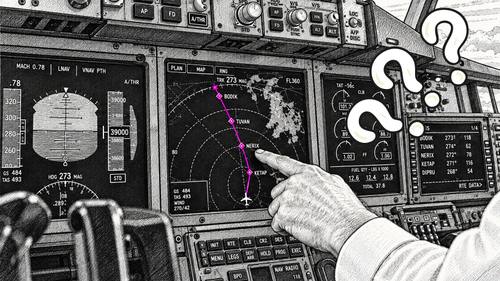
I get to work with the smartest people I have ever met in my life, and I meet more of them at every industry function I go to. So I can tell you with confidence: intelligence was never the problem. So what is? Why, after months and now years of AI use spreading like wildfire across the professional world, do things still happen that make us collectively gasp? The company data pasted into a free tool. The hallucinated content that sailed through to a client unchecked. The general fumbling of what these tools are actually good at versus what they are not.
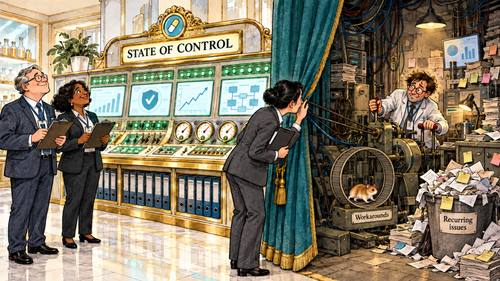
This week I tried to write down the stickiest wickets — the things that tend to stand between us and AI use that's both effective and appropriate. Here's my list:
1. Adoption is outpacing governance. What's a fun experiment today slips into a work deliverable tomorrow, and nobody mentions AI was involved. That's fine for some things. It is very much not fine for others.
2. Shadow AI. When you stack up the reasons not to disclose AI use — looking like you cheated, looking lazy, looking replaceable, or getting "rewarded" with the expectation that you now do three times the work — against the much shorter list of reasons to announce it, the secrecy makes a grim kind of sense. So people stay quiet.
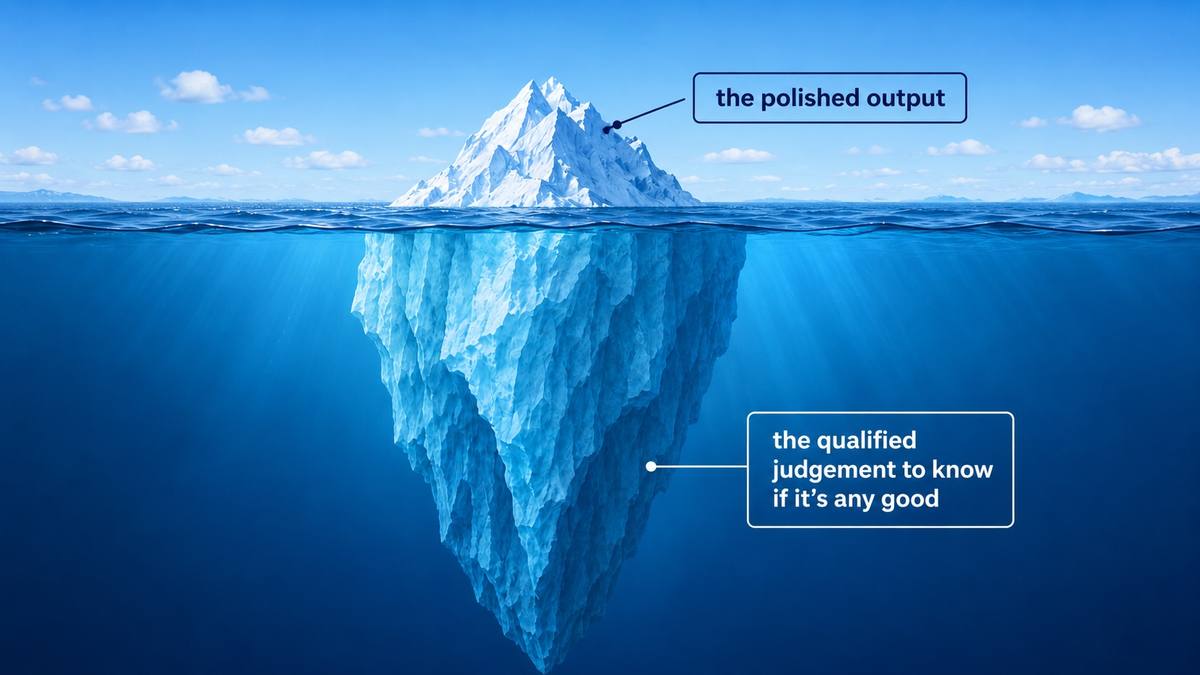
3. Our proxies are broken. We lean on mental shortcuts to signal what's good or trustworthy. A well-written resume meant a qualified candidate. (That was always a little absurd, but we ran with it.) Now a polished resume tells you almost nothing, and the same goes for anything that's long, uses fancy words, sounds nice, or looks complicated. The signals we've relied on for our whole careers just stopped working, and our brains have to be rewired accordingly.
4. Integration has to be expert-led. The domain expert and the AI super-user are very often two different people. Real, measurable success is revealed only when those two actually work together.
5. The target keeps moving. What was essential to know one wave of model releases ago may be irrelevant now. Worse, not all AI interactions are created equal — there's a real gap between the free chat apps and the paid ones, and probably another gap between what's approved for work and the frontier commercial models. None of that is remotely obvious to someone trying AI for the first time.
So what do we do about all this? There has to be an intentional shift in how we work, and yes, that sounds daunting. But once you accept that there's no inherent value in an output just because it's long, sounds nice, uses big words, or because you can now generate a hundred of them for basically free — you're forced to start making different decisions. What should AI be used for? What do we need to stop pouring effort and resources into? And how do we make this a team sport, where nobody's keeping secrets because there's nothing to hide — it's just regular work now?
Thanks for reading!
Alexa
News
FDA Says "No" to a Shortcut for Diagnostic AI
What's New: On May 15, the FDA rejected an industry proposal that would have reduced premarket review requirements for certain AI-enabled medical devices, signaling that regulators aren't ready to fully deregulate high-risk health AI even as they've loosened the reins elsewhere. The proposal, submitted by Australian health AI company Harrison.ai, asked the FDA to partially exempt several categories of AI-enabled diagnostic and detection software from traditional 510(k) premarket review under specific conditions. The pitch was essentially a frequent-flyer argument: developers with previously authorized products and strong post-market monitoring programs should face fewer regulatory barriers when introducing similar AI systems. The FDA didn't buy it.
How It Works:
The request targeted radiology and diagnostic AI software, including computer-aided detection and diagnostic systems used to identify abnormalities in medical imaging. It ran through the normal notice-and-comment process, published in the Federal Register with feedback accepted through February 27, 2026, drawing 47 comments.
The FDA's reasoning is the part worth internalizing. The agency argued that prior authorization of one AI device does not necessarily demonstrate that future products from the same company will perform safely or effectively, and it raised concerns about relying heavily on manufacturers' internal monitoring systems without sufficient FDA oversight.
Context matters here: this "no" lands after the FDA recently issued guidance viewed by some as loosening oversight of certain lower-risk AI-powered clinical decision support and wellness technologies. So this isn't a blanket crackdown — it's a line being drawn.
The market is not small. More than 1,000 FDA-authorized AI-enabled medical devices are already on the market, with radiology among the largest categories.
Why It Matters: The principle the FDA articulated should sound familiar to anyone in CMC or quality: a clean track record on one product doesn't pre-validate the next one, and a company's own monitoring is not a substitute for independent oversight. That's the same logic behind why we don't let a validated process for one product auto-qualify another, and why an internal QA function doesn't replace an inspection. The agency is also drawing an explicit risk-based distinction — increasingly distinguishing between lower-risk administrative or wellness-focused AI and AI tools that directly influence clinical decision-making — which is exactly the tiering logic that should govern how any of us deploy AI internally. The higher the stakes of a wrong output, the less willing anyone should be to remove the human checkpoint.
Source: Telehealth.org — FDA Rejects Proposal to Ease Oversight of AI Medical Devices
FDA Clears the First AI That Spots Sepsis Before the Doctor Does
What's New: The flip side of holding the line on diagnostic AI is clearing it when the evidence is strong — and the FDA just did exactly that. The agency cleared the Targeted Real-Time Early Warning System, developed by researchers at Johns Hopkins and commercialized by Bayesian Health — the first FDA-cleared, AI-based device that detects sepsis before clinical suspicion. The system integrates electronic health records with clinical AI to continuously monitor patients and flag sepsis up to 48 hours before a clinician suspects it.
How It Works:
The clinical case is built on real outcomes data, not a promising demo. A 2022 study of more than 764,000 patient encounters at five US hospitals found that when clinicians acted on the tool's alerts, sepsis patients were 18% less likely to die in the hospital.
The problem it's attacking is a timing problem. Effective sepsis treatment relies on catching it early, which is hard because symptoms like fever and elevated heart rate are common to many conditions — and each hour of delayed treatment can reduce survival by 8%.
The stakes are large. At least 1.7 million US adults and more than 18,000 children develop sepsis each year, and at least 350,000 adults and 1,800 children who develop it die during hospitalization.
On the regulatory mechanics: the device received 510(k) clearance, meaning the FDA deemed it "substantially equivalent" to a device already on the market — the very pathway the Harrison.ai proposal wanted to partially exempt other AI tools from.
A telling line from the company on why precision is everything here: catching sepsis early is a "needle-in-a-haystack problem" where missing a single case is catastrophic, demanding a level of precision most AI can't meet, even tools that look promising in preliminary studies.
Why It Matters: Put this next to the Harrison.ai rejection and you get the FDA's actual posture in stereo: the bar for high-stakes diagnostic AI is staying high, and AI that clears it gets to market. This is a clean example of the kind of evidence package that earns clearance — a large multi-site study tied to a hard clinical endpoint (mortality), not accuracy metrics in a vacuum. For those of us building the case for AI in regulated work, that's the template: tie the tool to an outcome that matters, validate it at scale, and show what happens when humans act on it. It's also a useful reminder that the AI debate isn't only about chatbots drafting documents — some of the most consequential regulated AI is quietly running in the background of patient care, and it's being held to a device standard, not a vibes standard.
Source: CIDRAP — FDA Clears First AI-Based Early Warning System for Sepsis
Get the next edition in your inbox
Clear, practical takes on what matters for your CMC, QA, and regulatory work, once a week.
No spam. Unsubscribe anytime.