Oldies but Goodies: 10 Time-Tested Mental Models to Make You Awesome at AI
Getting generative AI to "work" for you can be tricky. Try these classic strategies to get a good handle on things.
Howdy friends!
I want to talk about something that gets me surprisingly excited about AI, and it's probably not what you'd expect.
It's the philosophy. (whaaaaaat?)
There is something about working with this technology that scratches a very specific itch in my brain. Finding the right pieces, figuring out where they fit, adjusting one thing and watching everything shift, then holding your breath to see if it actually works. I don't know how else to describe it. It's the ultimate puzzle, and I've been chasing that feeling since I first started testing these tools seriously.
But what makes this moment different from any other technology I've seen is that everyone is still at the puzzle stage. Nobody has it figured out — not the vendors, not the consultants, not the people with "AI" in their LinkedIn title. We are all standing at roughly the same starting line, which almost never happens in tech. And that raises a fun question: what does "AI expert" even mean right now, when we're all about the same amount of clueless?
If you've been reading this newsletter for a while, you know I love getting philosophical. And yes, I think that is exactly the right word here. After a few years of testing, breaking, rebuilding, and teaching how this technology works, I've been reflecting on a bigger question: what type of thinking actually makes someone good at using AI?
Every other post on my social feeds seems to scream that AI is making us dumber, that we're losing our critical thinking skills, that the sky is falling.
I am seeing the exact opposite.
The people who think critically, who can define a problem, question an assumption, and evaluate whether an output is actually good, are the people who are going to 1) use AI the most and 2) be the best at it. Critical thinking isn't the casualty of AI. It's actually a prerequisite.
So this week, I took a deep dive not into AI itself, but into the tried-and-true mental models that have been around for decades (some for centuries). Systems thinking, first principles, feedback loops, Bayesian reasoning, the OODA loop. These weren't built for AI specifically, but I think they are the key to understanding how to become what I'd call an "above-average AI user." That title may not sound like much, but the gains from getting there are incredibly outsized relative to any technology we've seen before. The gap between average and above-average AI use is wider than it ever was for spreadsheets, search engines, or even the internet itself.
Below is a quick breakdown of 10 frameworks that apply directly to how AI can best be used, along with a blended model for how I like to explain AI literacy when I go in depth. I think you'll find that the "secret" to getting better at AI has very little to do with AI and everything to do with how you think.
Let's get into it!
10 Mental Models That Make You Better at AI (I promise)
Before I get into these, two things worth knowing upfront.
First, the strongest AI users I've encountered aren't thinking like "prompt engineers." They're thinking like strategists, researchers, designers, and critical thinkers. These frameworks are why.
Second, and I mean this sincerely: you do not need all ten of these. Skim them, find one or two that click with how your brain already works, and start there. If none of them grab you individually, skip to the blended framework at the end, which pulls the best parts together into a single approach. The goal is to find what makes AI make sense to you, not to memorize a list.
1. Systems Thinking
Look at the whole system, not just one part.
Originated with Ludwig von Bertalanffy's General Systems Theory in the 1930s.
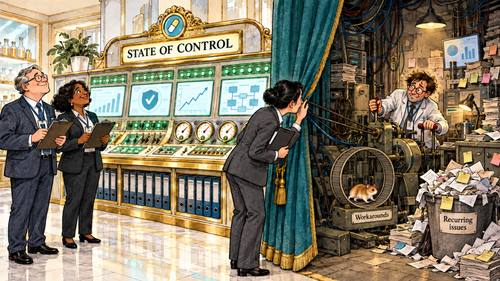
AI is never just one step. It sits inside a larger process: source materials, instructions, model choice, output format, review, and handoff. When something goes wrong, the issue is rarely "bad prompt." It's usually a breakdown somewhere else in the chain. This framework helps you see AI as one component in a workflow that you designed, and zoom out when things aren't working.
2. First Principles Thinking
Break the problem down to its fundamentals and reason up from there.
Goes back to Aristotle, 4th century BCE.
This might be the single most useful framework for AI work. It's the difference between typing "help me with this" and actually defining the task: is this summarization? Comparison? Drafting? Extraction? First principles thinking is how you move from fuzzy prompting to clear task definition, and clear task definition is where good AI work starts.
3. Scientific Thinking / Hypothesis Testing
Treat your ideas as testable, not sacred.
Born out of the Scientific Revolution, with Galileo contributing heavily in the early 1600s.
Good AI use is experimental. Test one prompt structure against another, compare models, check whether adding examples improves quality, see whether a two-step workflow beats doing it all at once. This mindset helps you stop looking for a magic prompt and start running small, practical experiments instead.
4. Cybernetics / Feedback Loop Thinking
Intelligent performance depends on feedback, adjustment, and control.
Formalized by Norbert Wiener in 1948.
This might be the most natural framework for AI use: define a target, generate an output, compare the output to the target, adjust your instructions or context, and try again. Most people think good AI use is about clever prompting, but in practice it's usually about building better feedback loops.
5. Design Thinking
Start with the human need, prototype quickly, iterate.
Rooted in Herbert A. Simon's 1969 work, later expanded through design practice in the 1980s–2000s.
This framework shifts the question from "what can AI do?" to "what does the person actually need?" and "what's the simplest useful prototype?" Especially valuable when you're building AI into team workflows or client-facing work, because a fancy output means nothing if it doesn't solve the real problem.
6. The OODA Loop
Observe, Orient, Decide, Act.
Developed by Air Force strategist John Boyd in the 1970s.
A decision-making cycle for operating under uncertainty. Applied to AI: Observe (what is the task, what information do I have?), Orient (what context and constraints matter?), Decide (which model or workflow?), Act (run the task and assess). Helpful for dynamic work where you're making decisions quickly and can't afford to overthink every step.
7. Double-Loop Learning
Don't just fix errors — question the assumptions behind the system.
From Chris Argyris's work in the late 1970s.
One of the most powerful AI literacy frameworks. Single-loop learning asks "how do I correct this mistake?" Double-loop learning asks "am I even framing the problem correctly?" If AI gives you a weak result, the issue might not be the wording of the prompt. It might be unclear task definition, missing context, wrong success criteria, or the fact that you're trying to automate the wrong step entirely.
8. Bayesian Thinking
Think in probabilities, not absolutes.
Named after Thomas Bayes, whose work was published posthumously in 1763.
AI outputs should rarely be treated as completely trustworthy or completely useless. The better questions are: how likely is this to be reliable? What would increase my confidence? What should I verify on my own? This framework helps you avoid both blind trust and knee-jerk dismissal, and land somewhere more useful in between.
9. PDCA (Plan-Do-Check-Act)
Improve through iterative cycles.
Traced to Walter Shewhart in 1939, popularized by W. Edwards Deming in the 1950s.
One of the clearest work-friendly frameworks for AI: Plan (define the task and quality bar), Do (use AI to generate a result), Check (review against requirements), Act (improve the workflow and keep what works). If you're on a team trying to build repeatable AI habits, this is where I'd start.
10. Socratic Questioning / Critical Thinking
Probe assumptions through disciplined questioning.
Goes back to Socrates, 5th-century BCE Athens.
Generative AI is extremely good at producing language that sounds right. That makes critical questioning more important than ever. What assumption is being made here? What evidence supports this? What's missing? Is this answer accurate, or just persuasive? If you only pick one framework from this list for reviewing AI outputs, make it this one.
The Blended Model: How I Teach AI Literacy in Depth
If none of the individual frameworks above jumped out at you, or if you want a single integrated approach that pulls the best parts together, this is how I think about AI work when I'm teaching it end to end. Six steps, and each one maps to a framework above.
Step 1 — Define the real problem (First Principles) What is the actual task? What outcome do I need? What part requires my judgment, and what part is mostly transformation or synthesis?
Step 2 — Map the workflow (Systems Thinking) What are the inputs? What context is required? Where does the AI step sit? Where can mistakes compound, and where should a human review?
Step 3 — Run a small test (Scientific Thinking / PDCA) What's my first experiment? What prompt, structure, or model will I try? What does success look like?
Step 4 — Improve through feedback (Cybernetics) What happened? How does the output compare to the target? What should I adjust: context, examples, model, instructions, or the workflow itself?
Step 5 — Reframe when necessary (Double-Loop Learning) Am I solving the right problem? Is the workflow flawed? Am I expecting too much from AI here? Should a human or another tool handle this instead?
Step 6 — Stay calibrated and critical (Bayesian + Socratic) How confident should I be in this output? What needs verification? What assumptions are hiding in the answer?
If you've come across my ALIGN framework, think of it this way: ALIGN is the practical checklist for getting a single AI task right, and these mental models are the deeper thinking habits that make you better at every task over time. -A
Get the next edition in your inbox
Clear, practical takes on what matters for your CMC, QA, and regulatory work, once a week.
No spam. Unsubscribe anytime.